
From urgency to impact: how renewable energy is transforming communities in Nicaragua
Nearly two decades ago, a newspaper headline sparked a journey that would help reshape Nicaragua's energy landscape. Today, through projects such as San Martin Hydro and Nordic Solar, renewable energy is not only powering homes and businesses, but also creating lasting benefits for local communities. We spoke with Rodrigo Mantica from IHC about the origins of this journey, the partnership with BIO, and the future of renewable energy in Central America.
24-09-2026
A vision born from necessity
For Rodrigo Mantica, the motivation to invest in renewable energy came from a pressing national challenge. Around 18 years ago, Nicaragua relied heavily on imported fossil fuels, making electricity expensive and vulnerable to fluctuations in global fuel prices.
"My true inspiration came from reading the top headline of our country's newspaper: 'Renewable power is urgent'," recalls Mantica. "At the time, about 78% of Nicaragua's electricity was generated through non-renewable sources such as bunker fuel and diesel, making electricity extremely difficult to afford for many people."
Since then, the country has undergone a remarkable transformation. Nicaragua now generates more than half of its electricity from renewable sources, including hydro, biomass, wind, geothermal and solar energy.
"Today, our country has the most advanced and well-balanced electricity grid in Central America," says Mantica.
Patience: the key ingredient behind renewable energy projects
Bringing renewable energy projects from concept to operation requires persistence, long-term vision and the ability to navigate complex development processes.
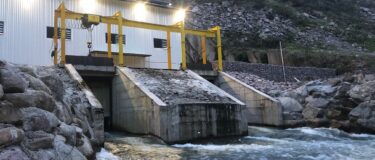
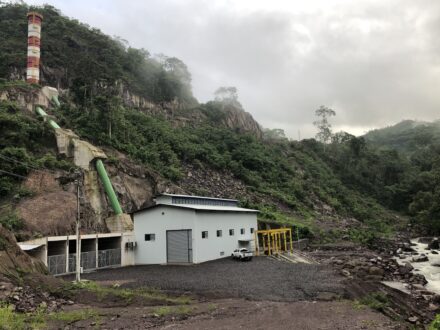
The development of San Martin Hydro began in 2010, but the plant only became operational in 2019 after years of land acquisition, technical studies, permitting procedures and construction work. Meanwhile, Nordic Solar reached operation after approximately four years of development.
"One of the most important elements you must have is patience," Mantica explains. "The biggest challenge often lies in acquiring the land needed for development. Other stages, such as permitting, studies and construction, also present challenges, but these can be managed directly to reach the final objective: commercial operation."
While solar parks can often be built relatively quickly once permits are secured, developing infrastructure projects remains a long-term commitment that requires strong partnerships and perseverance.
A partnership built on trust
The collaboration between IHC and BIO dates back almost two decades. According to Mantica, trust played a decisive role in establishing the relationship.
"As I engaged more in the development of renewable energy projects in Nicaragua, I was introduced to Ignace Van Synghel, a senior investment officer at BIO. He gave me the trust I was looking for to pursue a financing partnership with BIO," says Mantica.
Reflecting on the collaboration, he highlights not only BIO's confidence in the projects themselves, but also its belief in the local team and the country's renewable energy potential.
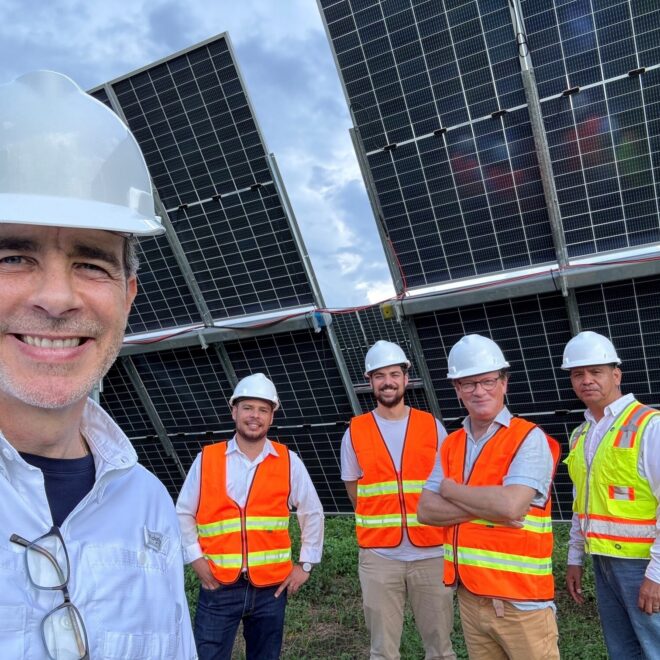
I will always be eternally grateful for the trust BIO placed in our team, in our country and in our energy projects.
Rodrigo Mantica, CEO of IHC Power
Creating value beyond clean energy
The impact of renewable energy projects extends far beyond electricity generation. Through a comprehensive social responsibility programme, IHC supports communities located near its project sites with initiatives focused on education, environmental protection, sports and access to higher education.
One of the programme's priorities is reforestation. Working together with local communities, the company contributes to restoring forested areas that have been affected by the expansion of agricultural activities.
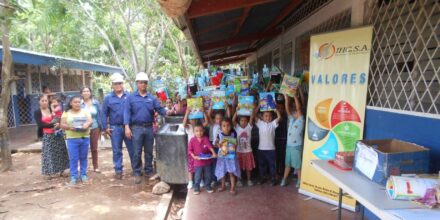
Education also plays a central role. Every year, the company provides school supplies to nearby schools, helping students access the materials they need throughout the academic year.
"The Ministry of Education distributes supplies at the beginning of the year, but by mid-year many of them are no longer usable," explains Mantica. "We decided to reinforce these donations in June so children always have useful supplies that keep them motivated."
The programme also supports local sports teams, supplying equipment for baseball and football clubs for both men and women, and awards an annual four-year university scholarship to the municipality's top-performing student.
"Some students might not have the opportunity to attend university because of economic reasons. We provide and pay for all expenses during their four years of study."
Looking ahead: the next chapter of renewable energy in Central America
Across Central America, the transition to renewable energy is well underway. Countries across the region have invested heavily in renewable generation and electricity interconnection systems, achieving electricity coverage rates above 95% in many cases.
Yet significant opportunities remain.
According to Mantica, the next phase of the energy transition will be driven by solar power and battery energy storage systems (BESS), helping countries further reduce their dependence on fossil fuels and volatile international oil prices.
"There is a great opportunity there," he says. "It is much cleaner and more reliable."
As Nicaragua and the wider region continue advancing towards a more sustainable energy future, projects like San Martin Hydro and Nordic Solar demonstrate how renewable energy investments can deliver multiple benefits: cleaner electricity, stronger communities and greater resilience for future generations.
San Martin Hydro
-
Debt € 6,421,625.00 (2017)Latin America and Caribbean
Read our most recent impact stories

Resilience, recovery and investment: the strength of Ukraine’s private sector
17-08-2026
In this interview, Andrii Nosok of Dragon Capital explains how access to long-term capital can help turn that resilience into sustainable recovery and unlock Ukraine’s economic potential.

