
Renewable energy as a driver of industrial growth: Insights from BIO at EAIF 2026
Organised by the Alliance for Rural Electrification (ARE), the Energy Access Investment Forum (EAIF) 2026 successfully concluded in Nairobi, Kenya, from 21 to 24 April 2026, bringing together more than 800 on‑site participants.
02-06-2026
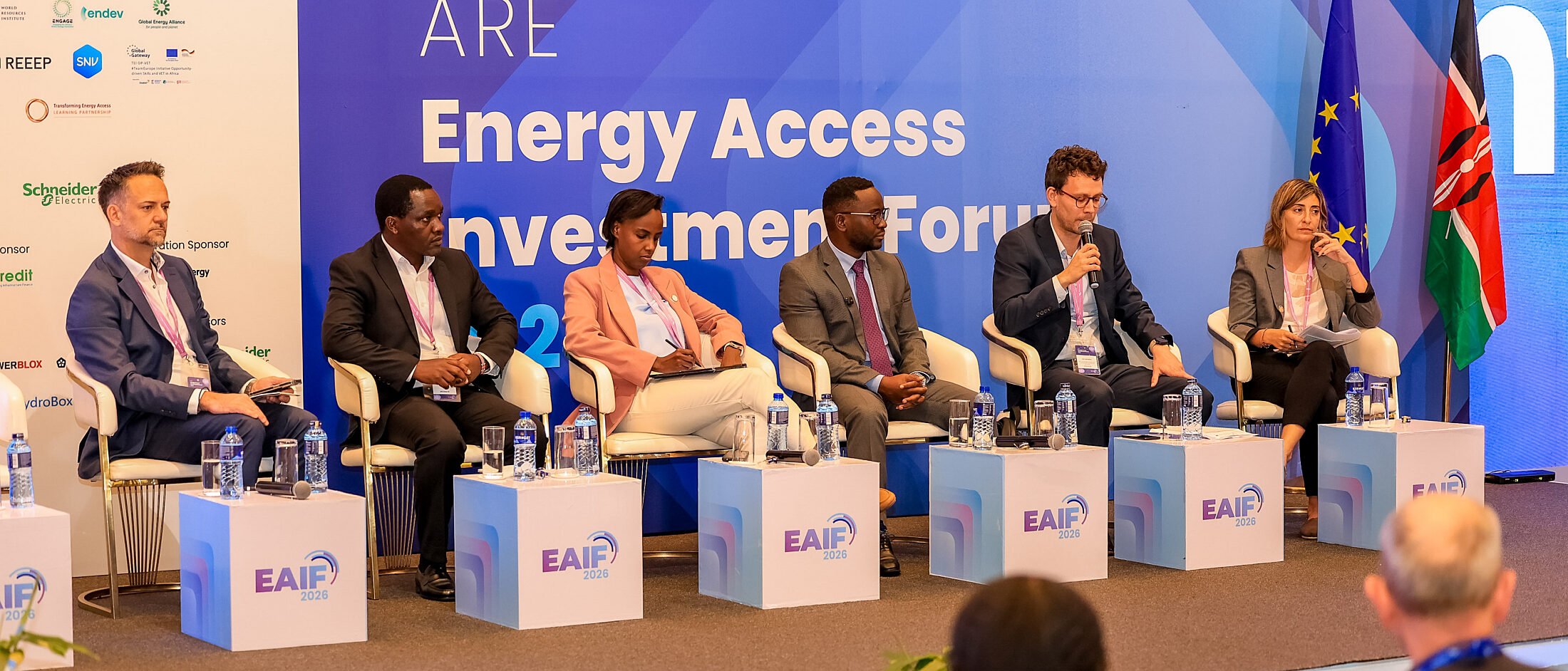
BIO was represented by Jan Lemaitre, Investment Officer, who attended the event and took part in a panel discussion. The session explored how renewable energy can act as a key driver of industrialisation across Eastern and Southern Africa, by powering sectors with rapidly growing electricity demand and unlocking new economic opportunities.
During his presentation, Jan outlined a financing strategy specifically designed to support the development of renewable energy while ensuring a positive socio-economic impact. BIO's capital deployment strategy is structured around two main pillars. On the one hand, indirect investments through funds allow for the support of riskier projects, such as mini-grids, solar home systems, or clean cooking solutions. On the other hand, his team's current priority is direct investments, specifically targeting small- or large-scale Independent Power Producers (IPPs), as well as Commercial and Industrial (C&I) projects, which currently represent the most commercially viable segments.

To reconcile this economic viability with development goals, Jan detailed a rigorous selection and structuring methodology. For C&I projects, BIO requires developers to be experienced, supported by reliable technical partners, and to apply strict credit check and debt collection policies with their end clients. When these criteria are met, BIO brings significant added value by extending loan tenors up to 13 years (compared to around 10 years in the traditional market), which allows companies to lower their tariffs, attract more clients, and dilute overall risk. As for IPPs, particularly for smaller-scale projects, BIO employs clever financial engineering by offering loans where repayment is concentrated at the end of the contract (back-ended). This flexibility allows for the integration of commercial partners offering lower initial interest rates, which reduces the total cost for the developer, improves returns to attract equity investors, and ultimately makes it possible to offer cheaper electricity.
Finally, Jan emphasized that development impact does not naturally stem from commercial success and requires a strict framework. BIO imposes absolute compliance with environmental, social, and working condition standards, including for all subcontractors involved in construction and maintenance. These requirements are not mere formalities: they are meticulously verified during due diligence and are subject to continuous monitoring throughout the life of the projects, thereby ensuring that industrialization through renewable energies is achieved in a truly sustainable and ethical manner.

Our main focus nowadays is IPPs, big IPPs or small scale IPPs, and also C&I, as we noticed they are the most commercially viable for our investment team.
Jan Lemaitre, Senior investment officer - Infrastructure
More news

BIO reaffirms commitment to Women's Economic Empowerment through the 2X Challenge
22-09-2026
Across emerging markets, millions of women continue to face barriers to accessing finance, growing businesses and participating fully in the economy. Yet we know that when women thrive, economies become stronger, businesses perform better and communities become more resilient.
Read more
2025 Annual Report: Scaling Impact Where It Matters Most
15-06-2026
We are pleased to announce the publication of our 2025 Annual Report—marking a year of strong growth, sharper focus, and deepened impact across our priority markets.
Read more